
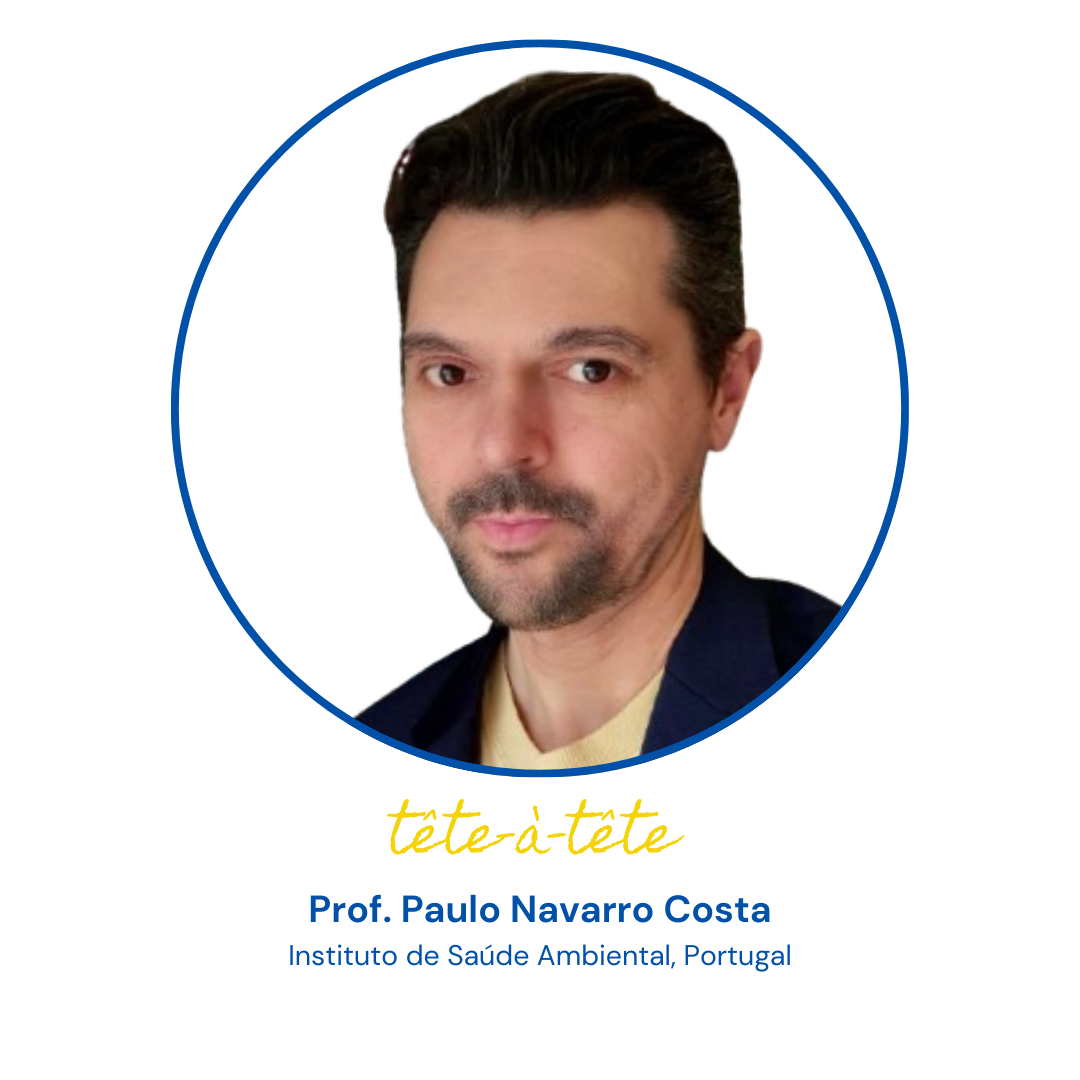
We are pleased to feature an interview with Prof. Paulo Navarro-Costa, our final speaker at the 18th NYRA Meeting. He is an Invited Assistant Professor at the Faculty of Medicine of the University of Lisbon and leads the EvoReproMed Lab at the Instituto de Saúde Ambiental. His research focuses on the genetic and molecular mechanisms underlying germ cell development and male fertility, combining evolutionary biology with reproductive medicine.
- When and why did you decide to work in the field of reproductive biology?
I was always interested in arts and in the creative process, so even before I had completed my biology degree I knew I wanted to make a career out of studying the creation of new life. I was also drawn to the almost transgressive concept that some of our cells exist primarily to outlive us, often in ways that run counter to our own immediate needs.
- Could you share a moment of challenge in your career, and the lessons you learned from it?
From a career perspective, I try not to dwell too much on failure or success because I’m not entirely convinced those categories are as reliable as we assume they are. For example, not getting a grant is typically labelled a failure, but if we view our professional life as a flowing, cumulative process, today’s setback can actually play out to one’s best interest in the future (and vice-versa). What I do recognize as a daily personal challenge is appreciating the beauty and excitement in discovery that fuels our creative process when most of my days are spent behind a desk making sure everyone in the lab has what they need to chase cool stories.
- What has been the greatest success in your career so far?
I find the notion of success rather unappealing, particularly given the unidimensional and formulaic way in which it is typically defined in academia. What I value far more is a fiercely independent approach to the creative process and the empowerment of young scientists. A central aspect of the lab’s philosophy is to create a fluid and supportive environment where everyone’s voice can be heard, irrespective of career stage. Sharing the excitement of a younger colleague describing something that perhaps no one has ever seen before is the greatest buzz I get from science.
At the same time, I have always been more interested in cultural products that emerge from the periphery rather than from central players. In many ways, another important aspect of our lab’s identity stems from its peripheral position, both conceptually and geographically. Operating at the margins offers freedom to approach biological problems from a more unconventional angle, and that sense of intellectual latitude is something we embrace.
- What advice would you give to young researchers?
Forge your own path but always stay pure, precise and dissonant.