
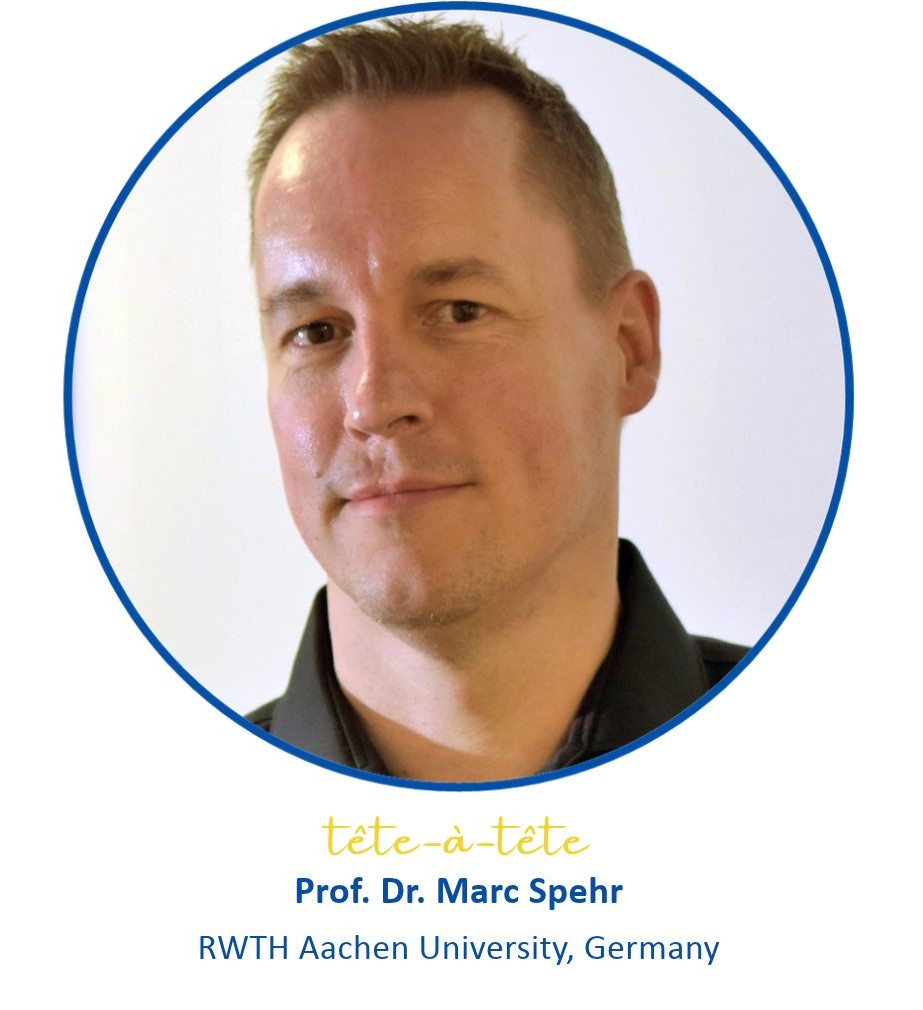
We are pleased to introduce our plenary speaker for the 19th NYRA meeting: Prof. Dr. Marc Spehr. He is a Full Professor of Chemosensation and Chair of the Department of Biology II at RWTH Aachen University, Germany. His research focuses on the molecular and cellular mechanisms underlying sperm function and testicular physiology, particularly the role of chemosensory signaling in sperm navigation and intercellular communication within the testis. His research contributes to the identification of an odorant receptor involved in human sperm chemotaxis, as well as the investigation of purinergic signaling and ATP-mediated regulation of peritubular cell activity and sperm transport. These studies provide insights into the cellular and molecular processes involved in testicular function and the regulation of sperm movement.
1-When and why did you decide to work in the field of reproductive biology?
I am a neurophysiologist by training. During my doctoral research I became interested in the role that olfactory receptor proteins might play in male germ cells. I have therefore followed research in the field of reproductive biology ever since. When I started my own lab, it was clear that part of my research would address questions in reproductive physiology. Today, we are aiming to transfer methodology from neuroscience to reproductive biology, allowing us to ask novel questions in vitro and in vivo.
2-Could you share a challenging moment in your career and the lesson you learned from it?
The scientific method is built on interpreting data, proposing hypotheses, and again challenging these hypotheses to either verify or falsify them. Sometimes, when new technologies become available, previous interpretations might not stand the test of time. While this is the core of the scientific method, realization that your own “brilliant” interpretations might not prove entirely correct can be hard. I learned over the years, that it is important to accept this type of “failure” as a key part of the way science works, while at the same time avoid “overselling” your results.
3-Reflecting on your career, what would you consider your greatest success?
So far, I still have a few years on the pitch, I am most proud of the people in my group that were pretty successful when they took the next steps in their careers. While this includes any career path those students and postdocs took, I am particularly proud of former graduate students that are now independent PIs.
4-What advice would you offer to young researchers embarking on their scientific careers?
Wow, how to answer that in a short paragraph? The most important thing is probably to do what you are passionate about. Stay curious!