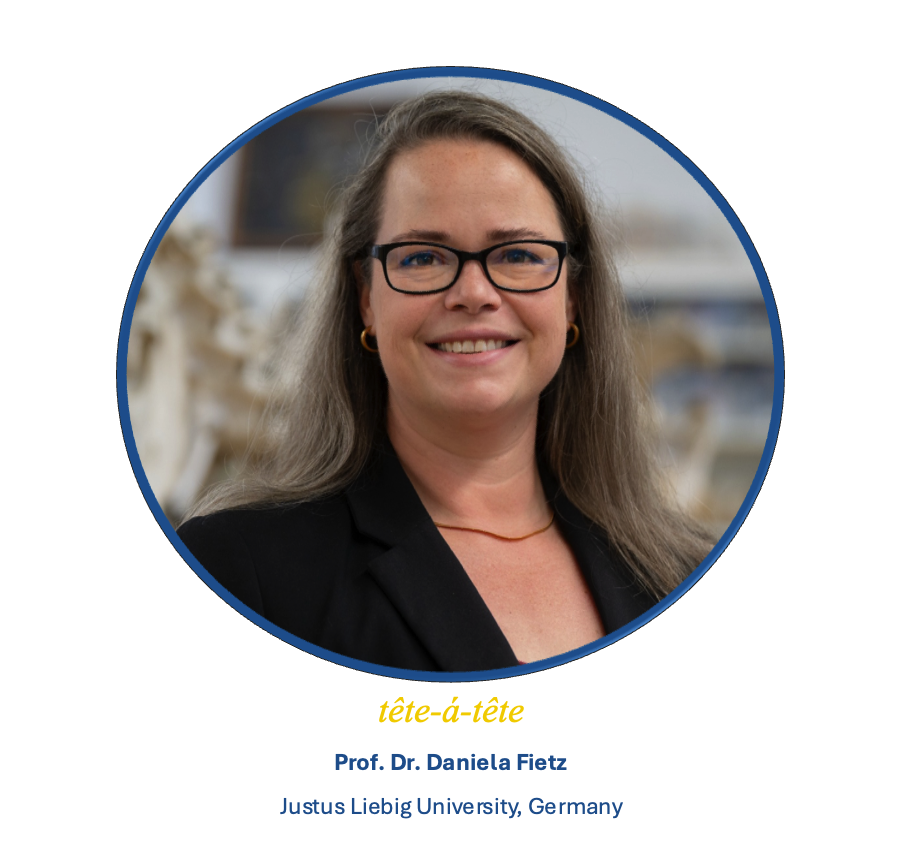
We are excited to highlight one of our plenary speaker for the 19th NYRA meeting: Prof. Dr. Daniela Fietz. She is a licensed veterinarian and Full Professor of Veterinary Anatomy, Histology and Embryology at the Institute of Veterinary Anatomy, Histology and Embryology at Justus Liebig University Giessen, Germany. Her research focuses on interactions between germ cells, somatic cells and immune cells within the testis, as well as on alterations in testicular tissue associated with pathological conditions. Her extensive research experience in reproductive biology encompasses both human and veterinary medicine, providing an interdisciplinary perspective on reproductive organs and their functions.
1-When and why did you decide to work in the field of reproductive biology?
It actually started by coincidence! After graduating from veterinary school in 2006, I wanted to pursue a PhD and found myself entering the fascinating world of reproductive biology. My first research project focused on histological changes in the canine uterus throughout the reproductive cycle. In 2008, I moved into human reproductive biology – and I have never looked back. What started as a coincidence turned into a scientific passion that has stayed with me ever since.
2-Could you share a challenging moment in your career and the lesson you learned from it?
One of the most challenging moments in my career was having to change my PhD topic due to irreconcilable differences with my supervisor. It was a difficult and uncertain time, and I honestly didn’t know how to handle the situation or what my next steps should be. Looking back, this experience taught me how important it is to talk openly about challenges, to build a supportive network, and to have people around you who can offer guidance when things get difficult. After completing my PhD (also an uncertain time), I was fortunate to find a mentor who encouraged me to become an independent researcher, expand my scientific network, and, most importantly, step out of my comfort zone, take the stage, and confidently present my own research. That support made an enormous difference in my career and continues to shape the way I mentor young researchers today.
3-Reflecting on your career, what would you consider your greatest success?
Of course, becoming a full professor of Veterinary Anatomy, Histology and Embryology and securing independent research funding are major milestones in my career, and achievements I am very proud of. Obtaining a permanent academic position, which is far from guaranteed in academia, gave me something incredibly valuable: the freedom to pursue my scientific interests and grow both professionally and personally without constantly worrying about what comes next. But looking back, I believe my greatest success is not a particular title, position, or grant. It is the network of wonderful people I have built over the years –who have supported me both scientifically and personally. And perhaps the most rewarding part of where I am today is that I can now give something back. I have the opportunity to support, encourage, and mentor the next generation of scientists and veterinary students, just as others once supported me. Seeing students and young researchers grow in confidence, discover their own strengths, and find their own paths is something I truly enjoy and consider one of the greatest privileges of my academic career.
4-What advice would you offer to young researchers embarking on their scientific careers?
Stay persistent, stay curious, and above all, stay kind. Build your network, find people who believe in you, and don’t be afraid to stand up for yourself and your ideas. But always remember that you don’t have to bring others down to succeed. Science is competitive enough as it is, and I firmly believe that kindness, respect, and supporting one another are strengths, not weaknesses. If you are considering an academic career, get involved in teaching early on – particularly in Germany, where teaching experience is an important part of the academic career path. And perhaps most importantly: Don’t let setbacks define you. There will be difficult moments, disappointments, and times when you question whether you are on the right path. I’ve been there myself. Ask for help when you need it, celebrate your achievements, even the small ones, and never forget why you fell in love with science and reproductive biology in the first place.Gutentor Simple Text